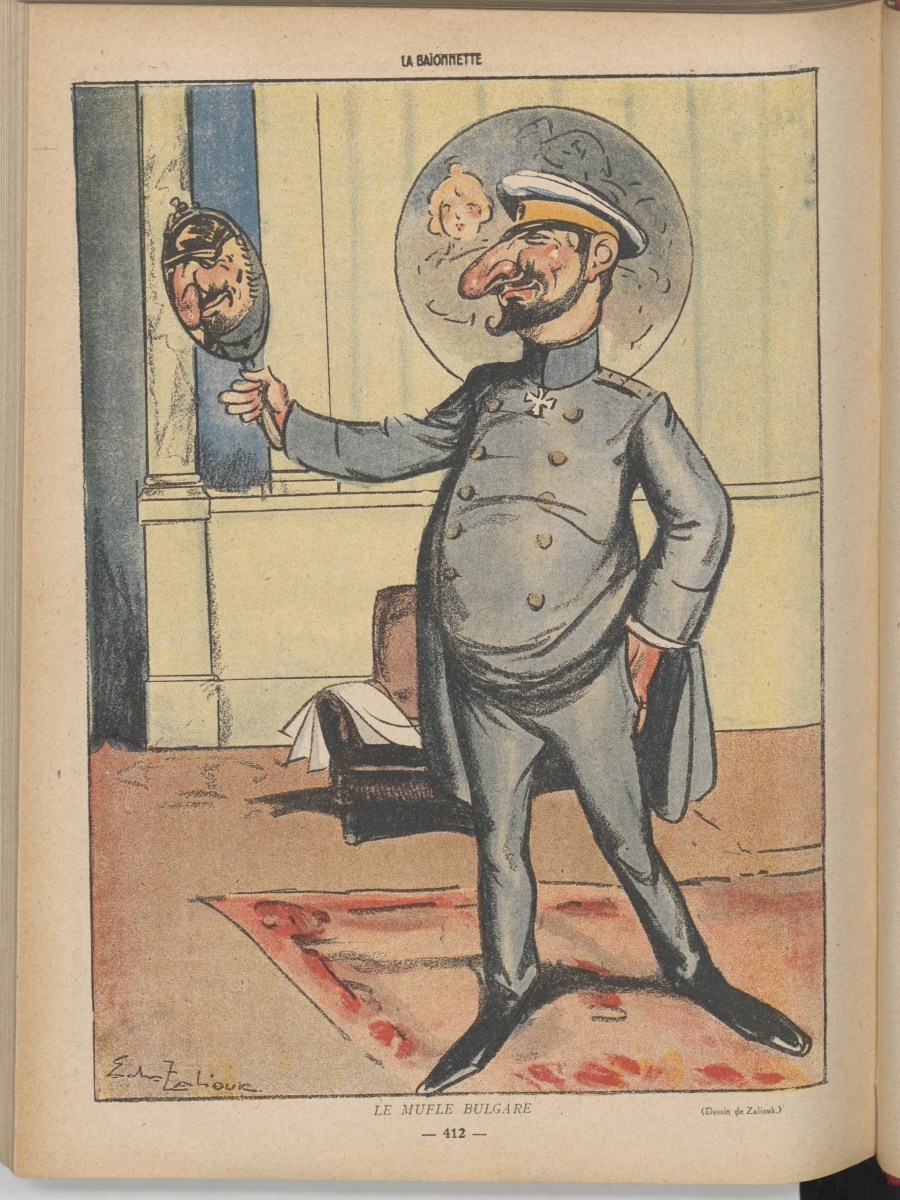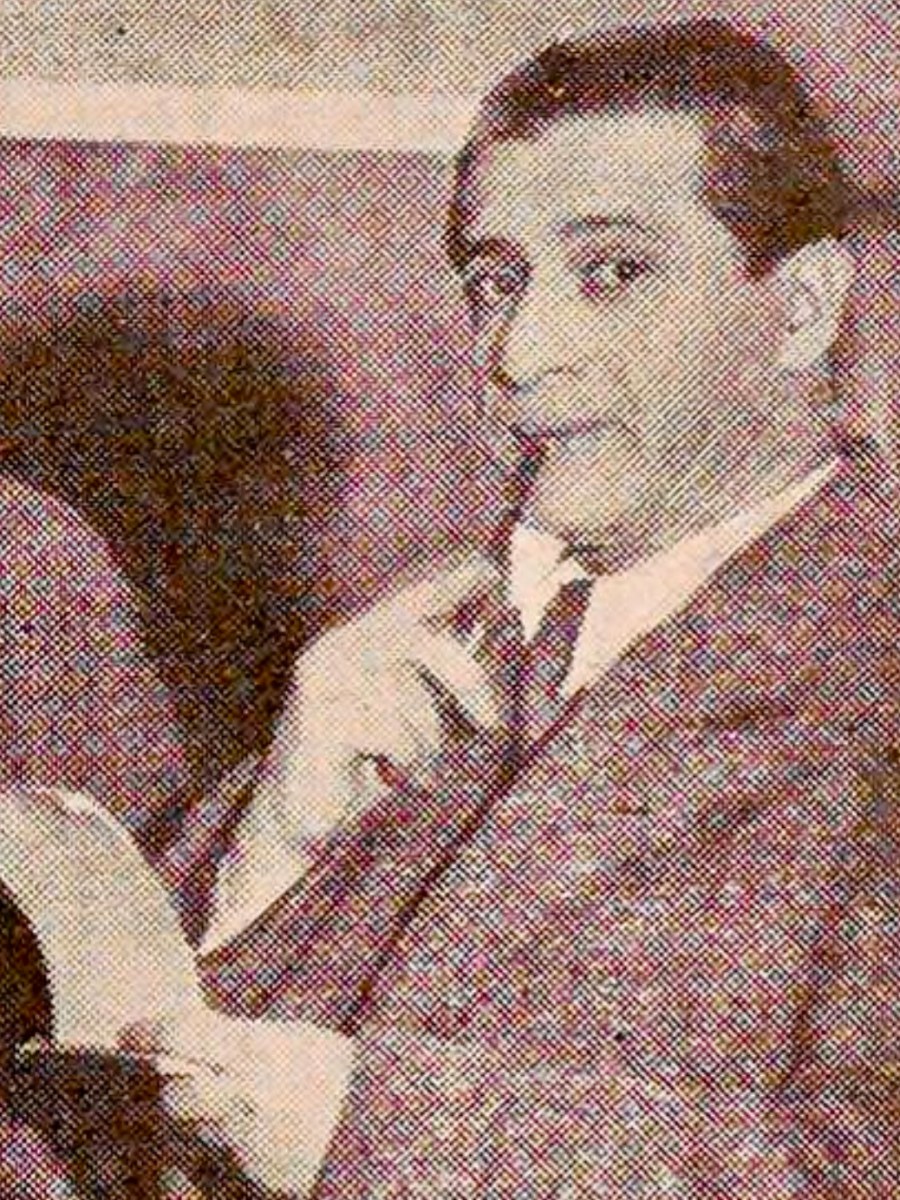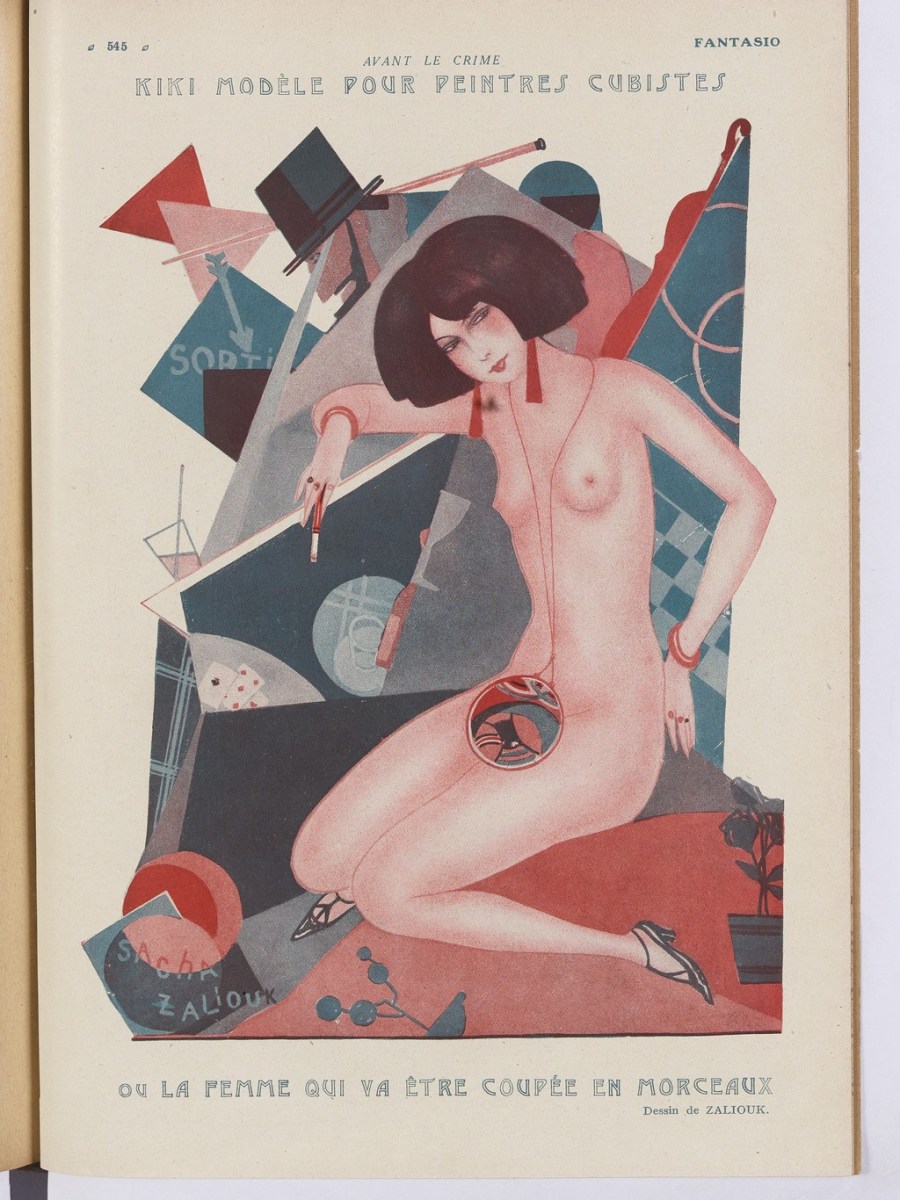
contact / faq / resources / instagram / tumblr


News: Sacha’s art is included in an exhibition of the Marek Roefler Collection of L’École de Paris – 17 October 2025 to 15 February 2026. Please see more details here. Thank you to the Musée de Grenoble for this information!


Early Beginnings

French archival documents state that Alexander Davidovich Zaliouk, better known as Sacha Zaliouk, was born in Radomyshl, Ukraine on 31st December 1887. As discussed below, Radomysl was then part of the Russian Empire and has a strong Jewish history (source, source).

Sacha’s full name is also spelled in its French form, Alexandre, on records to explain any variation in spelling across this blog. The Cyrillic form of Sacha’s name can be written as Александр Давидович Залюк or Александр Давидович Цалюк. His diminutive is written as Саша Залюк or Саша Цалюк. When written in the Latin alphabet, his surname can also appear as Tsalyuk, though this is rare.

Sacha signed his paintings as Sacha Zaliouk and used the form Zaliouk for official documents as well.


Radomyshl

The sources cited above regarding Jewish history in Radomyshl also expand on the origin of its Jewish roots. The Jewish Virtual Library states that its Jewish community was established in the 18th century and highlights the influence of the Hasidic rabbis of Chernobyl on the teachings in Radomyshl. In 1919, Radomyshl experienced pogroms, and its population continued to decline afterward, particularly considering the Soviet period and the Second World War. Please see the Jewish Virtual Library for more details on the population of Radomyshl.

More details on modern Radomyshl can be found here, detailing its beautiful attractions such as its castle.


Zaliouk Family

Sacha was born to David Schoulimovitch Zaliouk and Esther Naumovna Zaliouk (née Bieloroussetz) (source).

Esther’s maiden name can also be found in a document listing Soviet applicants seeking permission to reside or stay in France. Esther appears in the section for those applying between 1928-1931 (source, p.57).

The following information on Sacha’s family was compiled using the 1897 census. For more details on this census, including how this census was found, how the information was collected by authorities and how it should be evaluated, please see this page.

In the census, Esther Naumovna is listed as a member of the petty bourgeois (meshchanka*). She was born in Radomysl and registered in Radomysl. Her religion is listed as Jewish and her language as Yiddish. She was noted to be literate and educated in a private boarding school. Her source of income stems from a grocery store, of which she was the owner.

In the same census, there are three children in the household with the surname Zaliouk. There is Roza Davidovna Zaliouk, 17 years old at the time of the census, also listed as a meshchanka whose religion was Jewish and whose language was Yiddish. She was noted to be literate and educated in the city school.

The second child to be included in this census is Solomon Davidovich, 10 years old at the time of the census, meschanin, sharing the same language, education and religion as Esther and Roza in the household.

The third child is Sendr** Davidovich and his age is given as 8 at the time of the census. This is likely Sacha, though it should be noted that this age does not align with the date of birth provided in French archival documents. He was educated at home. His religion and language are listed as Jewish and Yiddish respectively.

There is another member of the household listed, a servant aged 15 years old by the name of Sura Berkovich Sobel. She is noted as a meshchanka and born in Kiev Governorate, Radomyshl Uyezd, village of Yanovka (or Yakovka). She was registered in Volhynian Governorate, Zhytomyr society, residing in Radomysh. Her language was Yiddish, and she was Jewish. She was noted to be illiterate, with her occupation being listed as ‘cook’.

Various articles and blogs mention Sacha’s father passing at an early age and Sacha’s mother subsequently renting out rooms to support the family. This blog has not been able to find archival sources to confirm anything about Sacha’s father. However, his mother’s occupation is listed as ‘veuve, rentière’/‘widow, annuitant/renter’ in an archival record (source, p.27), as well as her widow status in the above census, which lends some credence to this assertion about his mother.

A family tree on Geneanet (source) suggests Sacha had two brothers, Maoum and Salomon, and this blog is currently in the process of searching for more details. Per the census, there is a Solomon in the household, but no mention of Maoum. Roza Davidovich has not been noted in family trees found by this blog.

*Meschanin/Meshchanka: JewishGen defines this term as “member of the citizen class (meshchane) in Imperial Russia (m/f); urban dweller of lower social status; petty bourgeois townsman” or townswoman in its feminine form (source). This term later changed in meaning following the Revolution in 1917 (source) and the Soviet period.

**The genealogist and translator hired to translate this census noted that Sendr is likely Sacha, as Sendr is a Jewish equivalent for the name Alexander (additional source here). If he is listed as 8 years old in 1897, his date of birth (1887) does not fully align but the other details (surname and family names) make it likely that this is indeed the Zaliouk family and that Sendr is Sacha.

***JewishGen also highlights the importance of the term meschanin for helping descendants search the shtetl (a small Jewish town or village) that their ancestor came from, allowing better research to be conducted.

****Sacha’s Wikipedia has sections written by someone who says they are Sacha’s grandnephew (per his explanation of how he knows specific information in the edit section) and knew him during his lifetime. He mentions that Sacha was supported financially by a sister who moved to America. This is possibly Roza Davidnova but this blog is continuing to research her life and will add updates if any become available.


Education Before Paris

It is stated on several websites that Sacha studied in Odessa.

An exhibition of Russian Arts and Crafts occurred at the Whitechapel Gallery in the England, United Kingdom in 1921 (source). Through reaching out to this gallery, the following information was obtained from the archivists who provided a snippet from the catalogue used upon request:

‘Zaliouk, Alexander, 12, Rue du Moulin-Vert, Paris. Born at Kieff. Studied in Odessa, where he won a scholarship for the Petrograd Academy. Went to Paris. Exhibited in Russia and in several Salons at Paris. He signs “Sacha Zaliouk”’.

10 of Sacha’s artpieces are listed afterward:

“450. Calvary, 451. Adolescent, 452. Basket of Flowers, 453. En Promenade, 454. Head, 455. Lui, 456. Divtchina, 457. Another Kiss, 458. Grappe de Raisins, 459. Dernier Soupir.”

On 28th June 1929, long after Sacha was well-established in Paris, L’Univers israélite published an article about Sacha under ‘Les Arts’ which focuses on Sacha as he exhibits his work ‘au Salon des Humoristes, ouvert acutellement au Palais de Glace’ (source).

The article then details his past. It states he was born in ‘Europe Orientale’, Eastern Europe, in Ukraine.

‘He received his first artistic training in Odessa and Petrograd.’

That Sacha studied in Odessa seems likely. In his own writings about when he left for Paris (source), he notes that he left from Odessa train station. The scholarship in Petrograd is also repeated by various users across sites who say they are a descendant of Sacha, but no archival evidence can be produced here to add any more information than that.


Paris: An Artistic Haven

It was common for artists of this time period to travel to Paris, which had a rich artistic community. Many Ukrainians and Russians left to carve out their place, first in Montmartre, and then in Montparnasse, which overtook Montmartre as the ‘hot spot’ for artists. Whether this was to escape difficulties in their home countries, to seek adventure, or improve their economic situation (or all of this and more) depends very much on the artist.

In any case, Paris was thriving artistically, and Sacha writes that he left Odessa in 1910 to take part.

For further details on the culture of Paris at this time, as well as the purpose of this blog, please see this page.


Arrival in Paris

As mentioned, Sacha wrote about his early beginnings in Paris. This article appeared in ‘Paris Montparnasse’ on 15th March 1929 (source), describing his departure from Odessa and his arrival in Paris. Please see the translation of this article below:

“1910. – I leave…Odessa train station… Warsaw… the German border… Berlin…Gare du Nord…Paris !!! Finally…

A Russian interpreter, who I find at Gare du Nord, asks me if I want to go to the artists’ quarter… How does he know that I am an artist?…That’s right! My long hair… You’ll go to Montparnasse…

First taxi… Boulevard Edgar-Quinet… First hotel… I meet a pretty blonde… First woman! A day of fun… followed by a day of sadness… an October day…hotel living…

Some days later… I take a look in my pocket: a letter! Several addresses… I read: upon arrival in Paris, go see M. Dimitrieff, President of the Foreign Press, at the ‘café de Madrid’… I go there…a charming welcome…

Time passes… there you go, a month that I’m in Montparnasse… at La Rotonde…little Rotonde… Libion’s Rotonde [1]… nice atmosphere… I feel at home… in a big family… pleasant entourage… from all countries, from all the corners of the globe … – revolutionaries, monarchists, poets, artists, Spaniards, Japanese, Germans, Polish – and others – Russians, English – and still others: long hair, shaved heads … Everything is there … Few gigolos… and [pas de femme pour michés – translation note: I struggled to find an English translation for ‘miché’ – a prositute’s client is one suggestion online]

Time goes on… We are far from the ‘Grande Parade’ [Context: reference to the War].

1912 – I’m staying with Kalinine at 15 Rue Liancourt…Kalinine…a man of the Revolution [2]… an intimate friend of Gorki [3]…Lounatcharsky…[4] another celebrity of the Russian Revolution comes to see us fairly often… a great man! I get to know him.. we hit it off… He guides me in Paris… I am happy… Time runs out even faster…

I enter L’École des Beaux Arts, in the studio of Raphaël Colin [sic].. I work hard, and I like my companions! All good old boys!

1914. – The start of the ‘Great Test’ …

Month of August 1914: the first instance of the global tragedy… I am part of the tragic figuration… for the defence of civilisation… First excursion: Verdun… After: Champagne, Somme, Meuse, Belgium…

1916. – Death still dances!…

1917. – A change: I leave for the Orient ; 22 months between Thessaloniki and the Romanian border … [5] malaria… fevers… [6]

1919: Return to France. Vive la France ! I am French and demobilised…

I change my uniform for my [rapin] suit… I work… the Expositions!.. the Salons… It’s necessary to live… the magazines… ‘La Vie Parisienne’, ‘Fanatasio’, ‘Le Sourire’, [7] and others, ask me to collaborate…

My illusions, my pains, my failures and my sorrows… what’s the point in describing them?

I love my Montparnasse … and life! – SACHA ZALIOUK.”

Context:

[1] Libion’s Rotonde – Victor Libion was the founder of La Rotonde in Paris, where artists from all over the world would meet.

[2] Kalinine… – I believe Sacha is possibly referring to Feodor Kalinin, who lived in Paris and acted as secretary to the Russian Social Democratic Labour Party during this time. I don’t think it’s Mikhail Kalinin as I can’t find any evidence that Mikhail ever lived in Paris, so I find Feodor more likely. Feodor was also connected to Lounatcharsky, mentioned below.

[3] Gorki… – Similarly I believe Sacha is talking about Maxim Gorky, author and advocate for socialism. Associate of Lunacharsky who Sacha also mentions.

[4] Lounatcharsky – Anatoly Lunacharsky, Russian Marxist revolutionary. From Wikipedia, “In 1911, Lunacharsky moved to Paris, where he started his own Circle of Proletarian Culture”.

[5] I leave for the Orient – Aligns with his military records which state “In the East from 23rd September 1917 to 27th March 1919.”

[6] Malaria… fevers.. Sacha may simply be describing the situation of the war, and not implying that he himself had malaria. Unclear.

[7] Publications to which Sacha repeatedly contributed his art and humour


Education in Paris

Another statement often copied and pasted across auctioneer sites for Sacha’s art, is that he studied at L’École nationale supérieure des Beaux-Arts. Sacha mentions the Beaux-Arts in his own article and it is referenced in the previously referenced article in L’Univers israélite (28th June 1929, source), which reads:

He then entered the Ecole des Beaux-Arts in Paris, in Raphael Collin’s class, but the war put an end to his peaceful work in the rue Bonaparte. […]

Since then, his artistic output has been constantly enriched by original works, imbued with sincerity and freshness. Mr Gaston Réard, in the monograph he devoted to the artist, said, ‘Sacha Zaliouk is entitled, in every right, to our love…This son of a pained Ukraine, who wanted to be welcomed and recognised as its spiritual heir, a Paris without which there would be no global consideration… We love you, Zaliouk; your beautiful talent is our pride and joy.”

The article ends with a note of Zaliouk’s independence as an artist, and adds, “A keen observer, he was able to paint impressive visions of Parisian life, without allowing himself to be overwhelmed by any particular pictorial trend.”

When contacted for details on Sacha’s possible attendance, the Beaux-Arts provided the following response:

Original:

“Les archives de l’Ecole sont pour cette période conservées aux Archives nationales. Sacha Zaliouk n’a pas réussi le concours d’entrée mais il a peut être été admis dans l’atelier de Raphaël-Collin. Je crois qu’il n’existe pas de registre pour les élèves de cet atelier mais je vous laisse le soin de le vérifier dans l’inventaire en pièce jointe.”

Translation:

“The archives of L’École for this period are preserved in the National Archives. Sacha Zaliouk didn’t pass the entrance exam but he may have been admitted to Raphaël-Collin’s studio. I believe that there is no register of the students of this studio but I will let you verify it in the attached inventory.”

The attached piece can be found here. While Sacha’s name does not appear in the document, he wrote in the article mentioned above that he “entered L’École des Beaux Arts, in the studio of Raphaël Colin [sic]’.”

While the archives show he failed the entrance exam, he possibly did study under Raphaël-Collin and there is no proven record as there is no register, but the statement is echoed in most articles that delves into his past.

It can be concluded that Sacha likely studied in Odessa and Petrograd, then likely under Raphaël-Collin for a period in Paris.


Marriage to Berthe Faeige Lerner

Sacha wrote that he arrived in Paris in 1910. He was most certainly there by 1914, when the First World War broke out, because he married Berthe Faeige Lerner on 16th March 1914 at 3:30PM (source, p.27, Acte 604 – Zaliouk-Lerner).

Firstly, it shows Zaliouk’s profession as ‘homme de lettres et artiste – peintre’, or ‘literary man/man of letters and artist – painter’. It also adds that he was born in Radomysl (Russia) on December 31st 1887 and that his address is Rue du Moulin-Vert, 12, which is where his studio was based (see relevant section below).

His parents are listed as David Schoulimovitch Zaliouk, deceased, and Esther. As mentioned earlier, Esther is described as a widow and annuitant/renter. Her location is given as “Odessa (Russia)”.

Secondly, we gain vital information about Berthe. She is ‘sans profession’ – unemployed. She was born in the 11th Arrondissement of Paris, on December 27th 1887. Her birth certificate can be found here on page 5 of the archives, middle of the right page. In their marriage certificate, Berthe was listed as living at 59 Avenue de la République.

Her parents are listed as Samuel Lerner – négociant en plumes, which I can only offer a poor translation of ‘pen merchant’.

Also, Berthe’s father’s name is listed as Samuel on the record. His full name is given as Anroum Schmoul Iankel Iosiowitch Lerner, which matches the Geneanet profile cited above. Samuel or Schmoul appears, as well as Anroum.

Berthe’s mother is listed as Rosa Lerner, also unemployed, wife. Their address is also 59 Avenue de la République.

More details on the Lerner family can be found here.

Other than Berthe’s parents, those present at the marriage are:

▢ Name: Jacob Léon Gelma, Age: 51 years old, Occupation: dentiste (dentist), Address: 30 Boulevard Voltaire.  

▢ Name: Armand Iticovitz, Age: 39 years old, Occupation: négociant (merchant), Address: 183 Boulevard Voltaire.

▢ Name: Charles Lerner, Age: 31 years old, Occupation: négociant (merchant), Address: 11 Rue Saussier-Leroy. 

▢ Name: Joseph Lerner, Age: 28 years old, Occupation: négociant (merchant), Address: 58 Rue Saint-André des Arts.

Notes on Wedding Attendees

Jacob Léon Gelma is buried in Père-Lachaise. His grave states he was born January 10, 1863. He appears to be buried with French actor Lucas Gridoux (as shown by this picture which shows both names – link between them unclear but research is ongoing). This grave also appears to read: ‘A la mémoire de nos chéries Claude GELMA épouse ALICH 47 ans et Simone ALICH 19 ans – Victimes de Nazis en 1943’.

The connection to the Nazi Party is crucial at this junction not only for how this period impacted Sacha’s life, and the lives of the Jewish community in France as a whole, but also because it is important to dedicate a portion of this blog to Armand Iticovitz.

Claude Gelma and Simone Alich do not appear in archives of victims of the Holocaust that were searched (though it could exist elsewhere), but there was information about Armand.

Sadly, Armand appears on the list of Holocaust victims found here through the United States Holocaust Memorial Museum. His date of birth is given as ’15th March 1875′ which would confirm his age above and that it is the same Iticovitz. He died in Auschwitz. There is information about him on the Memorial de la Shoah site (and more). Following an outreach to the United States Holocaust Memorial Museum, as Armand appears on their website, to request information about him, there came the following response: 

“Thank you for your email.  Unfortunately, in this case, all we have is the deportation list showing that Armand Iticovitz, born 3/15/1875 in Jassy, Romania was living in Paris, occupation listed as a furniture seller, and was deported from Drancy to Auschwitz 11/20/1943.  There are no other documents on him so it is assumed that he was killed upon arrival in Auschwitz.  We have no other documents on him here. I am attaching what we do have.”

Please note ‘Möbelverkaeufer’ is the translation of furniture seller. In the document directly above, his jewellery is listed as ‘1 platinum and stone ring’. The amount above appears to be ‘11,497 francs’ and 13 Reichsmark’

Additionally, Armand’s naturalisation record can be found here. His date of birth is given as 15th March 1875 in Jassy, Romania. His profession was also categorised as ‘cabinetmaker’. Finally, he was naturalised in the section under ‘January to March 1926’. While searching the Iticovitz surname, there was also a result for an ‘Anna Iticovitz’, maiden name Lerner, possibly a connection between the families. Her date of birth is given as 18th March 1883 in ‘Gitomir (Russie)’ – Zhytomyr, Ukraine today. Anna did not show up in results from the archives, which hopefully implies she survived the war.

The Mémorial de la Shoah kindly explained the yellow-coloured document that shows Armand’s possessions upon arrival, responding in French and English:

“Lors de l’arrivée des internés au camp de Drancy, ceux-ci étaient fouillés et leur argent été confisqué par les autorités du camp. En échange, ils recevaient un reçu qui est le document que vous voyez en-dessous de l’inscription “carnet de fouille”.

Translation:

“When the prisonners [sic] entered the Drancy camp, they were searched by the authorities and all of their money was confiscated. Instead, they receive a receipt which is the document you see under the inscription “carnet de fouille”.”

The ‘carnet de fouille’ is found at the bottom of the ‘receipt’ given back to prisoners.


Sacha’s Studio: Rue du Moulin-Vert

On 3rd June 1932, the publication L’Africain presents an article about Sacha’s studio (source). The author describes how it is always a ‘great pleasure’ to meet Sacha, who is ‘the most modest and the most intelligent artist that one can imagine’. It is in Montparnasse that one is most likely to see Sacha, in a garden ‘de la rue du Moulin-Vert’, a street where he has long since had his studio, as the author notes and which can be verified by its appearance on documents as far back as his wedding in 1914.

The author writes: “Everything is blue in this studio, the velvet of the sofa, the cushions, the carpet, the silk of the lampshades, right down to the eyes of the pretty creatures that shimmer along the walls between the picture frames, or on the easels.”

Sacha is quoted as saying, “Yes, I prefer to paint faces… Still life, landscapes, that’s too easy. One puts too much of whatever one wants into a painting that’s meant to convey trees, water, the breeze… And nothing is verifiable in these creations. One can invent anything. But when it comes to translating a human face, what a job! What a task! What difficulties! What trials! Life… life… Life, that is what is most fleeting, most elusive and the most difficult thing to express on canvas.”

The author remarks that the eyes in Sacha’s paintings are always the most melancholic. Sacha responds, “Of course. It’s this melancholia which attracts me in a face, which makes me desire to reproduce the traits of the person whom I meet. The gaze of a woman reveals her to me absolutely, with a total sincerity, more than her words and her actions…”

The author continues to describe the studio: “We chat at length in the studio, where a stove is humming away. A pretty young woman, her eyes amused by the wisps of her cigarette, throws somes words into the conversation… And we leaf through the magazines to which Sacha contributes: La Vie Parsienne, Le Sourire. He always deals with topical subjects, gallant subjects mixed with Parisian humour.”

It finishes:

“‘But nothing rude,’”‘ says the young woman, while the three of us look at a drawing entitled ‘Tempête sur l’Asie’ (Storm over Asia), which shows four beautiful women holding hands and dancing.”

The author: “‘Apart from drawings like this’, I ask?”

Sacha: “I do a lot of portraits and nudes. Here, I’m sending this one to the Salon des Indépendants. On an easel, a beautiful beige and green painting… A young woman naked with her stockings halfway up her thigh.”

We can also see visuals of Sacha’s studio from this short film, at 9:24, mentioned in more detail under ‘Images of Sacha‘. Unfortunately, there is no name given to the young woman in this article. Please also see ‘mentions of Sacha in the media‘.


First World War: Sacha’s Experience

This portion of the blog could not have been as detailed without the generous input of Didier, who is the owner of the website chtimiste.com. This website is extremely useful for anyone interested in learning more about the First World War and those who fought in it.

To summarise this section, Sacha joined the French army and remained ‘in the interior’ of France from January 1916 until September 1917, at which point he left ‘for the Orient’. In his own article, he wrote that he spent ’22 months between Thessaloniki (note: Greece) and the Romanian border’. He was in Macedonia and later returned to France in 1919. He gained French citizenship after his service.

For details of Sacha’s services and more sources, please continue:

The L’Univers israélite (28th June 1929, source) article noted Sacha’s experience in the First World War:

“The artist was not indifferent to the tragedy that was shaking France. He joined the French army and was sent to Macedonia, where he did his duty valiantly. In 1919, demobilised, he returned to his palette.”

The primary source for this section is his fiche matriculaire (“FM”), or military record, which provides the following information:

Original:

Détail des services et mutations diverses

“Appelé à l’activité le 5 avril 1921. Manque à l’appel et classé dans les délais le dit jour No 978 (178). (THIS IS CROSSED OUT ON RECORD). 

Engagé volontaire pour la durée de la guerre le 5 janvier 1916 à Paris 2/2 (?). C au titre de la Légion Étrangère incorporé au 2e Reg Etranger à compter de(s) dix/six/dits jours*… Arrivé au Corps 6 Janvier 1916. Caporal le 21 Septembre 1917. Sergeant le 22 septembre 1917. Libéré le 28 mars 1919 (D.M** 1838 ? au 29? Janvier 1919 (1) En subsistance au 85e R.A.L. le 11 Avril 1916. En subsist. Au 115e R.A.le 23 septembre 1917. Certificat de bonne conduite “accordé”

Père de 1 enfant.

*dix/six/dits jours : du dit jour : à cela veut dire du jour cité précédemment, donc le 5 janvier

**DM : Décision ministérielle

Translation:

Service details and various assignments

Called to active service on 5th April 1921. Missed roll call and reported on time on the reported date – No 978 (178). (Note that this line is crossed out on the original record).

Enlisted voluntarily for the duration of the war on 5th January 1916 at Paris 2/2 (?) C under the Foreign Legion, incorporated into the 2nd Foreign Reg from the stated day(s) … Arrived at the Corps 6th January 1916. Corporal 21st September 1917. Sergeant 22nd September 1917. Discharged 28th May 1919 (D.M 1838 ? to 29? January 1919 (1). On subsistence (duty) with the 87th R.A.L on the 11th April 1917. On subsistence (duty). With the 115th R.A.L on 23rd September 1917. Certificate of good conduct “awarded”.

Father of one child.

The units listed are as follows:

Under ‘Corps d’affectation’ we see the following units:

  • 2e Regiment Étranger
  • 85e Regiment Art. Lourde (Subs)
  • 115 Regiment Art. Lourde (Subs)
  • 151 (?) Reg. Art. d’Infanterie 
  • Underneath we see: “BON D’OUVRIERS D’ARTS (?)”
  • Dépôt du 1e R. Étranger P(M?)

The following campaigns are listed on the bottom left of the record:

Original:

Contre l’Allemagne du 6 janvier 1916 Interieur au 22 Septembre 1917.

En Orient du 23 septembre 1917 au 27 mars 1919.

Translation:

Against Germany from 6 January 1916 to 22 September 1917.

In the East from 23 September 1917 to 27 March 1919.

Physical description of Sacha:

  • Cheveux: châtains (Hair: Brown)
  • Yeux: Marrons (Eyes: Brown)
  • Front: Ordinaire (Forehead: Ordinary)
  • Nez: Moyen (Nose: Medium)
  • Visage: Ovale (Face: Oval)
  • Taille: 1 m. 68 centim (Height 1m 68 centimetres – about 5 feet 6 inches)

In ‘La Grande Guerre par les artistes‘, by Hermann-Paul, whose publication date is given only as 1914-1915, we see a drawing by Sacha.

Didier believed that Sacha was part of the 2nd Foreign Regiment and further clarified that he was not an artilleryman. He was attached in an administrative function to heavy and wore the infantry uniform. The titles assigned on Sacha’s DM are not fully accurate, as sergeant was not a rank, nor was corporal of this regiment. Instead he would have been maréchal-des-logis and brigadier respectively and Didier suggested Sacha was part of a company, roughly 120 men, of the 2nd Foreign Regiment, which protected the heavy artillery due to its vulnerability to being attacked.

Getty Library Reference kindly shared all mentions of Sacha in a book entitled ‘Ukrainian Artists in Paris: 1900- 1939’ by Vita Susak, which has been exceedingly difficult to source online. One of the drawings included within this book shows a man with the words ‘Moussa Koné Beyla B.T.S’ and Sacha’s signature with Macédoine 1918. There is also a possible town over Macedonia that has not yet been identified. Susak uses Sacha’s own writing about his arrival in Paris as a source for his biography at the back of the book.

B.T.S refers to the Bataillon de Tirailleurs Sénégalais, a group of soldiers who fought in the war (not only the Great War but many of France’s wars), as France had colonised several African countries by this time. The B.T.S were also on the front lines at Macedonia, where Sacha was stationed for a portion of the war.

As stated, Sacha became a naturalised French citizen and appears on the records for 1920 (source).

There is a note on the FM that an application was made by Sacha on 31st December 1926 for details of his FM to present it to the authorities for a decoration.

Additional Note on the Lerner Family and First World War:

Schmoul Lerner (Sacha’s father-in-law, Anroum Schmoul Iankel Iosiowitch Lerner, called Samuel on their marriage certificate as mentioned above) also has a record, but he would have been 56 years old in 1916. This document does provide his own parents’ details and a physical description is also provided. 

Joseph Lerner (Sacha’s brother-in-law) holds a record which also allows more detail for his family and his own description. Written under his record we see the following (any gaps were due to being unsure of the word):

Détail des services et mutation diverses (Campagnes, blessures, actions d’éclat, décorations, etc.):

Inscrit ____ no.1555 de la liste du 11e arr. Réformé No. 2 par la Commission spéciale de Vincennes, le 29 septembre 1908 pour palpitations et poids insuffisant ____.

Translation:

Service details and various assignments (campaigns, injuries, acts of valour, etc):

Registered _ no.1555 on the list of the 11th Arr. Discharged No. 2 by the Vincennes Special Commission on 29 September 1908 for palpitations and underweight _.


Father of One: Paulette Sèverine Zaliouk

As mentioned in Sacha’s military record, he was the father of one child.

Paulette Sèverine Zaliouk was born on 15th April 1916, as shown by her birth certificate (source, p.10, Acte 769). The address given is 59 Avenue de la Republique, which matches Berthe’s parental home.

Sacha’s age is given as 28 at the time of Paulette’s birth and his occupation remains artiste/peintre. Berthe’s age is given as 27 years old, and no profession is listed.

Her address remains the same as above. Samuel Lerner is mentioned, 57 years old, negociant, same address. 

Emile Moisset, (- sur bois), Rue de Charonne 97 was present. 

The rest I cannot quite make out after Bonaventure.

Death

Paulette died, aged 9 years old, on 30th May 1925 “at the residence of her father and mother” which is listed as 59 Avenue de la République (source, p.9, Acte 1650).

The paragraph reads:

Original:

“Le trente mai mil neuf cent vingt cinq, une heure, est décédée au domicile de ses père et mère, avenue de la République 59, Paulette Séverine ZALIOUK née à Paris XIe arrondissement le quinze avril mil neuf cent seize, fille de Alexandre ZALIOUK, artiste-peintre, et de Berthe Faeige LERNER, son épouse, sans profession. Dressé le trente mai mil neuf cent vingt cinq, douze heures quinze, sur la déclaration de Roger RIVET, vingt trois ans, employé, rue Notre Dame de Nazareth 24, qui lecture faite a signé avec Nous Eugène KIRSCH, officier de la Légion d’Honneur, adjoint au Maire du XIe arrondissement de Paris.

Translation:

“On 30th May 1925, at one o’clock in the morning, Paulette Séverine ZALIOUK, born in the eleventh arrondissement of Paris on 15th April 1916, daughter of Alexandre ZALIOUK, a painter, and Berthe Faeige LERNER, his wife, died at the home of her father and mother, avenue de la République 59. Prepared on 30th May 1925, at twelve fifteen, on the declaration of Roger RIVET, twenty-three years old, employee, rue Notre Dame de Nazareth 24, who, having read it, signed with Us Eugène KIRSCH, officer of the Legion of Honour, deputy mayor of the eleventh arrondissement of Paris.”

Eugène Kirsch was a lithographer, photographer, and a Knight of the Legion of Honour. Further information about him can be found here and here. As above, he was a deputy mayor for the 11th arrondissement of Paris, which was where Sacha and his family lived. He was also a foreign trade advisor and general agent of the Établissements Poulenc Frères, which was a French chemical, pharmaceutical and photographic supplies company (closed in 1928).

To note, there is still a funerary service at Rue Notre Dame de Nazareth 24 today.

Burial

She is buried at Père-Lachaise with her family. Père-Lachaise responded to an email about the familial plot to explain that Anroum Lerner (Berthe’s father, Paulette’s grandfather) bought the plot in 1925. Exact email quote: “…dans la concession n° CPL 83 CC 1925 acquise par M. LERNER Anroum.”). More detail can be found in the relevant section below.

Paulette’s burial is mentioned in ‘L’Univers Israélite’ under ‘Inhumations du 25 au 31 mai‘ (burial).


La Horde du Montparnasse: Sacha and his ‘big family’

The most useful resource for documenting Sacha and other artists’ experiences in Montparnasse, and particularly around La Rotonde, has been the book ‘Montparnasse, hier et aujourd’hui : ses artistes et écrivains, étrangers et français, les plus célèbres‘, by Jean Émile-Bayard. It was published by Jouve in 1927, and can be found in its entirety on Gallica. Sacha is counted among the modern painters and humourist artists.

On page 430, Émile-Bayard describes a group of artists known as “La Horde du Montparnasse”, of which Sacha was a member.

According to this book, La Horde was founded on the 12 February 1925 by an artist named M. E. Fernand-Dubois (1869–1952). While it’s not always a reliable source, his Wikipedia states that he was born in Belgium and practiced sculpting. The group was created in the famous La Rotonde of Montparnasse, which is where the picture to the left of La Horde was taken. Its quality is not the best, but it is captioned ‘A committee meeting – La Horde – at the American-bar of La Rotonde’. The name was chosen, writes Jean Émile-Bayard, to avoid confusion with other artistic groups of the period.

Members

Jean Émile-Bayard breaks down the members of the group according to their title: M. E Fernand-Dubois is the ‘Chef suprême’ (supreme leader), and the ‘Grand Chefs’, or great leaders are Maurice Leroy and Hervé-Baille, humourist artists. The ‘scribe-sacré’ is Raoul Cernay, a man of letters, who relented his position on 9th June 1925 to be replaced by Charles de Lagrille, as mentioned in the footnotes. Another ‘scribe’ is Garo, painter, and the divine stenographer is a Mlle. A. Mauer. The bosses, or leaders, are Jean Émile-Bayard, man of letters; d’Ambrosio, statuary, Gen. R, painter, Mme Girardet, artist/drawer, Marcel Parturier, painter, Tito and Sacha Zaliouk, humourist artists/drawers. Finally, the treasury guardian is Adol-Jan, artist/drawer, and the keeper of the archives is named Daveline, painter (p. 431-432).

Any information about the members listed here will be examined further down in more detail.

Notes

Émile-Bayard lists the manifesto of the group and goes into detail about the balls that La Horde organised, as well as the ‘Marché aux Navets’, inaugurated in June (1925) on Boulevard Raspail. The tone of Émile-Bayard’s book is playful. He does say that the members were forbidden to speak of politics or religion at their gathering spots, and it is a very well-structured and organised group with a clear hierarchy. Again, Émile-Bayard shows great amusement in his writing, and allows an insight into Montparnasse of this era.

On page 433, he writes:

Original:

“En deux mots, M.E Fernand-Dubois a réuni l’élite intellectuelle du territoire du Montparnasse, pour défendre sa réputation mondiale, pour soutenir ses artistes malheureux, les secourir même, afin de créer des prix littéraires, d’organiser des bals et des fêtes au profit des diverses œuvres de bienfaisance.

Translation:

“In a nutshell, M.E Fernand-Dubois united the intellectual elite of the Montparnasse area, to defend its global reputation, to support its unfortunate artists, even to secure them, in order to create literary prices, to organise balls and parties for the benefit of various charities.”

Émile-Bayard also inserts pictures of members of the group, which are examined in more detail under the page ‘Images of Sacha’ above. More details on La Horde and their parties can also be found under ‘Montparnasse and its Artists’, as well as the general artistic hub that was Montparnasse during this era.

On page 468 of his book, Bayard describes the flea market La Horde ran. This has continued as a tradition today as shown by this site. Bayard mentions the owners of La Rotonde supported the flea market and the artists who sold there (including Sacha).


World War II: The Missing Years

It is in the 1920s and partly in the 1930s that Sacha is the most present in publications (see: ‘Mentions of Sacha in the Media’).

The article from 3rd June 1932, the publication L’Africain, shows Sacha was still in Paris in the early 30s.

In 1936, Sacha does appear in the archives under ‘Fonds spécial du chômage du département de la Seine/Special unemployment fund of the Seine department’, with the date of request for assistance being ’04/14/1936′, and the address is 42 rue Sorbier Paris 75020, right beside Père Lachaise.

However, when the war begins in 1939, there is very little about Sacha, other than some art in publications, and his contributions to newspapers. At least in 1940, he took part in exhibitions in Paris, as cited on the page ‘Mentions of Sacha in the Media’.

In 1945, the year the war ends, we see his artwork is sold.

Sites very vaguely claim that he ‘hid with close friends in Paris and the south of France’ during WW2. No definitive place in the south is given, nor is there much detail on who these friends might be.

Another site writes that Zaliouk was very close to the artist Samuel Granowsky, who later died in Auschwitz, and that this death affected Sacha greatly (see the page: ‘Montparnasse: Context and Culture’.)

As a Jewish artist himself, it is impossible to think Sacha was not impacted by the war and the loss of friends, family, neighbours, and others during it. Unfortunately, any specifics on Sacha’s experience during the war has so far not been possible for me to determine.

If ever information is uncovered about this period of Sacha’s life, more definitively, it will be added to this section.

Final Years: Sacha’s Passing and Burial

However, when the war begins in 1939, there is very little about Sacha, other than some art in publications, and his contributions to newspapers. At least in 1940, he took part in exhibitions in Paris, as cited on the page ‘Mentions of Sacha in the Media’.

While Sacha’s experience during WW2 is uncertain, it is at least clear that he and Berthe were in Paris following the end of the war.

Passing of Berthe

Berthe passed away on September 27th 1964. She is buried with her family at the Pere-Lachaise plot, where Paulette was also buried (p.24). In the notes is written ‘Saint Maurice, Seine’, a suburban area in south-eastern Paris.

Passing of Sacha

Sacha died March 13th 1971. He was 83 years old. His death certificate can be found under Acte 316 for the year 1971 (7e, p. 28). 

The place of his death is given as 42 Rue de Sèvres, while it is stated he lived at 45 Rue Notre-Dame des Champs. He is listed as the widow of Berthe Faiege Lerner and his parents are mentioned. Jeannine Desbordes could be traced through a family tree which also mentioned her in a death certificate and led to the ‘Hôpital Laennec de Paris‘ which moved location in 2000. It is possible Desbordes was a supervisor here (which is what was mentioned in the other death certificate – only her title, not a connection to the hospital, but it is the only hospital I found on that street.) 

Burial

Père Lachaise Cemetery is where Sacha was buried, and they kindly provided the following information about his burial:

Original:

Je vous informe que M. ZALIOUK Alexandre dit Sacha a été inhumé le 17 mars 1971 au cimetière du Père Lachaise dans la concession n° CPL 83 CC 1925 acquise par M. LERNER Anroum.

Cette sépulture se situe dans la 96ème division, comptez 13 lignes de tombes à partir de la 95ème division, puis 7 tombes depuis la 97ème division.

Translation:

I inform you that Mr. ZALIOUK Alexandre, known as Sacha, was buried on March 17, 1971 at the Père Lachaise cemetery in concession no. CPL 83 CC 1925 acquired by Mr. LERNER Anroum.

This burial is located in the 96th division, count 13 lines of graves from the 95th division, then 7 graves from the 97th division.

Sacha’s burial certificate confirms this information. We know that he was buried with his wife, his daughter, and the Lerner family, in the plot that Anroum purchased in 1925. See below a map of the cemetery.

Régis Dufour Forrestier, who is the President of ‘Amis et Passionnés du Père Lachaise (APPL), kindly shared images of Sacha’s grave and further added a section about Sacha on the APPL website. For anyone who is interested in the history of this cemetery and wants to learn more, the APPL is full of information. It is noted in Sacha’s section that there is a headstone with the faint outline of a woman, which is probably for Paulette, given the grave was purchased after her death. It shows two names:

Paulette ZALIOUK, 1916-1925.

Ch. LERNER, 1859-1938.

Sacha’s name does not appear on the grave.

Please see the photographs of Sacha’s grave so that anyone who cannot visit Paris might also be able to view it:

Additional notes:

According to his Wikipedia, Sacha ‘suffered a devastating stroke in the late 1960s […] and was hospitalized in a weakened condition.” It also states a former student took possession of Sacha’s artwork and sold it and also placed him in a nursing home. There is no evidence to support this statement other than a PhD that could not be found for this blog.